
Andreas Ketels
Artist and founder of Glowbus®
Fire works best in a garden when you do not add it as an afterthought, but build it into your plan from the outset. Then it becomes a natural focal point for sightlines, seating and the way the garden is used once evening falls.
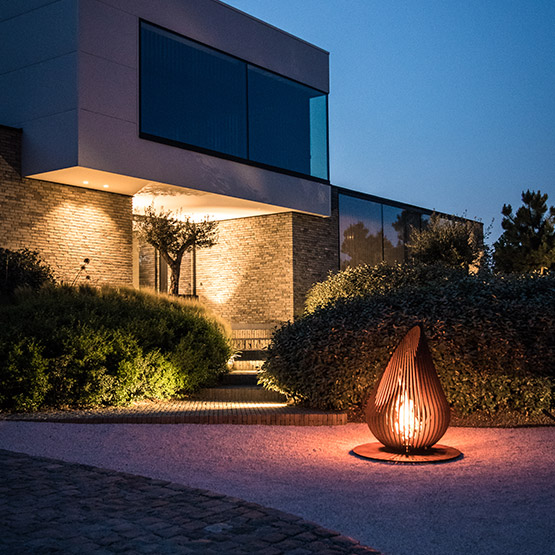
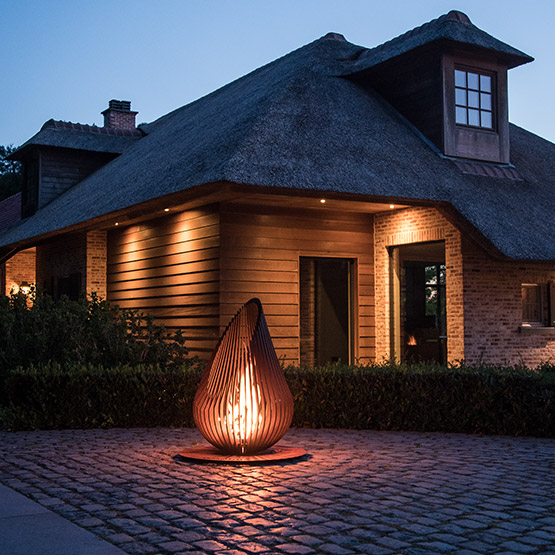
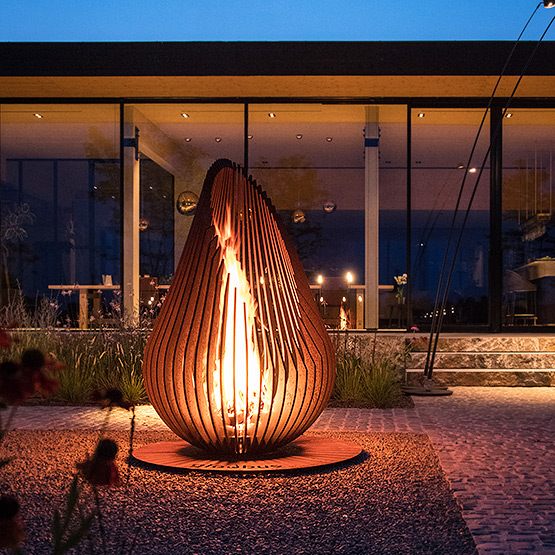
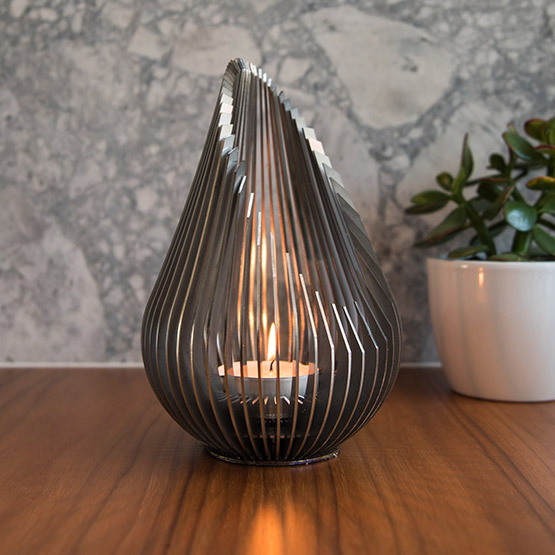
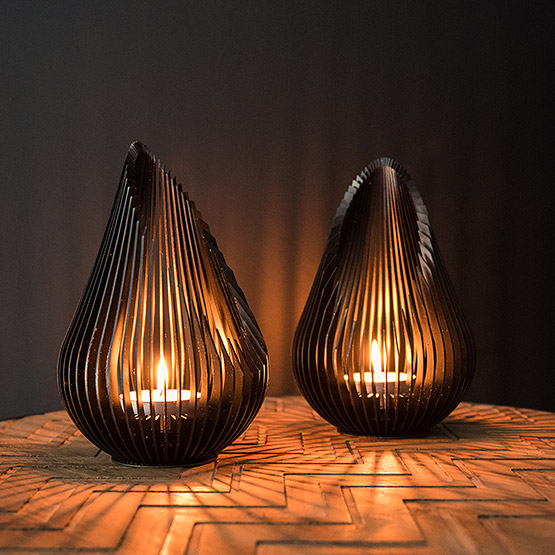
This is exactly what Glowbus reference projects show: how an open design fire basket such as the Glowbus Dewdrop reveals its strength. By day, it stands as a sculptural presence in the space; after sunset, it brings living light, warmth and a sense of closeness that immediately makes the garden feel different.
Those who consciously include fire in the design make better choices about scale, placement and materials. Below, you can see how to choose the right type of fire object, how fire works beautifully alongside seating and cooking, and which maintenance choices genuinely make a difference outdoors.
Why fire gives a garden more depth and intimacy
A garden changes as soon as fire enters it. Not only because the temperature becomes more pleasant on cool summer evenings or in autumn, but above all because firelight gives a space visual depth and softens it emotionally. Dark corners do not disappear, but gain layers; a terrace feels less flat and more like a place to linger.
That is why a fire feature is more than a source of warmth. It becomes a visual focal point that naturally draws the eye, and where conversations slow down, grow calmer and last longer. Fire makes outdoor living more inviting, and it extends the moment when the garden is truly experienced: not only during the day, but especially in the hours when atmosphere makes the difference.
Choose a fire object that fits scale, sightlines and ritual
Anyone who wants to integrate fire into garden design does not choose on the basis of taste alone, or simply on the question of fire basket or designer fire basket. The right form is connected to the size of the space, the sightlines from the house and terrace, and the ritual you want to create around the fire.
| Design situation | What works well | Why it works in the overall design |
|---|---|---|
| Larger terrace or open garden area | An open design fire basket such as the Glowbus Dewdrop can work particularly well here as a sculptural centrepiece. | The object has room to breathe, remains visible from several angles, and contributes to the overall design both by day and in the evening. |
| Smaller outdoor space | Choose a lighter fire presence and pay extra attention to scale, clear circulation and distance from furniture, facades and planting. | This keeps the space calm, clear and safe, without the fire visually taking over the setting. |
| Focus on views and atmosphere | Place the fire where it is visible from the main seating area and preferably from indoors as well. | Then the fire object remains part of the everyday experience, even when you are not sitting right beside it. |
| Focus on warmth and togetherness | Use a seating arrangement that embraces the fire, for example in a semi-circular shape or an open circle. | Only when the fire connects naturally with the seating does it feel truly integrated, rather than like a separate element in the garden. |
Let fire extend the evening, from seating area to outdoor kitchen
A well-placed fire feature extends the evening almost by itself. When the air cools, a seating area with fire stays comfortable for longer, without the garden losing its open character. That makes a big difference, especially in late summer and autumn: you do not have to go indoors as soon as the temperature drops.
But comfort is only part of the story. Firelight also has a special effect on the atmosphere of an outdoor space. It softens lines, warms materials and makes conversations more intimate. Wood, stone, textiles and planting respond differently in that moving light, making the garden feel calmer and richer than it does under functional outdoor lighting alone.
Fire can also connect beautifully with the dining table or outdoor kitchen. Not necessarily as a cooking appliance in itself, but as a warm heart beside the moments of eating, serving and lingering afterwards. When you position the fire object so that it remains visible and tangible without blocking walking routes, cooking and togetherness flow into one another. This creates a ritual that goes beyond warmth alone: the garden becomes a place where people linger, pour another glass and consciously let the evening slow down.
Fire can also support light, cooking and togetherness
A fire feature gains more meaning when it becomes part of the complete outdoor room. Not as a separate addition, but as an element that brings light, use and connection together.
- Use fire as ambient light rather than as the only light source. Let the base lighting remain discreet and give the flames the leading role for warmth, depth and a softer evening mood.
- Let the fire form a social axis in the seating area. Chairs and benches work best when they do not only face outward, but are also turned towards one another and the flames.
- Place the fire object where dining and lingering afterwards can meet. Between the dining table and lounge area, or just beside it, a transition naturally arises from active dining to quiet togetherness.
- If you also want grilling or small cooking moments around the flames, choose only a setup, accessories and way of using it that are intended for this by the manufacturer. This keeps the experience beautiful and straightforward in use.
- Connect the fire with materials that support the story of the garden: steel, stone, wood, dark mineral tones and tactile outdoor fabrics create cohesion and allow the fire object to settle naturally into the design.
- Think about the space around it as well. A fire feature only feels complete when there is room for a side table, a throw, a drink and a natural route through the space without a sense of clutter.
Materials that age beautifully outdoors call for calm maintenance
Outdoors, a fire object lives along with the weather, the seasons and its use. That is not a shortcoming, but part of its character.
- Materials such as steel and cast iron are often chosen for outdoor fire objects because they feel robust and can withstand intensive use. They age visibly, but can actually gain character in the process.
- Basic maintenance remains simple: remove ash only when everything has fully cooled, keep the object clean, and protect the surface where the manufacturer recommends it in order to limit unwanted rust formation.
- Do not expect a static object. An outdoor fire feature acquires traces of season and use, but with calm, consistent care it remains strong, safe to use in accordance with the instructions, and visually appealing.



Experience Glowbus®
in your area
To discover the Glowbus® collection in real life, you can contact an official dealer in your area.