
Andreas Ketels
Artist and founder of Glowbus®
Yes, a garden fireplace under a canopy can work, but only if the space is genuinely open and you pay careful attention to ventilation, clearance, surface and fuel. With the Glowbus Dewdrop, this is not about a built-in fireplace or closed wood-burning stove, but an open design fire pit and fire sculpture. It is precisely that open character that makes the experience warm, alive and social, while also calling for careful placement.
Under an open canopy, fire takes on something special. The light lingers longer, conversation becomes calmer, and outdoors feels sheltered without losing its openness. That atmosphere is beautiful, as long as safety always remains the first condition. If you want to see how that works in real gardens, view our references.
When fire under shelter is a good idea
A Dewdrop works under a canopy if the structure is open on several sides and heat cannot build up beneath the roof. Think of an airy patio canopy or pergola, not an almost enclosed veranda with glass walls, screens or heavy curtains all around. The freer the air can move, the smaller the chance of built-up heat, bothersome smoke or an unsettled flame caused by wind blowback.
Ventilation is the first requirement
With an open fire, heat and combustion gases rise, but under a roof they are always slowed down. That is why ventilation is not a detail, but the basis. If you use wood, this matters even more. Wet or treated wood causes smoke, odour and residue under the canopy more quickly. Choose only dry, untreated wood and keep the fire controlled. If you notice smoke lingering or being pushed back under the roof by side winds, the spot is too sheltered and it is better to move the Dewdrop to a more open area.
Clearance above and around
An outdoor fireplace under a canopy requires generous distance from anything that can retain heat or catch fire. Always keep ample clearance above, beside and around it in line with the Glowbus product instructions, and look critically at the material of the roof. Wood, fabric, plastic, plants, cushions and wall decoration should never be in the heat zone or too close to the flame. Think not only about the visible height of the fire, but also about radiant heat and heat build-up as the fire burns for longer.
A stable, heat-resistant surface
The right spot should feel not only beautiful, but also calm and solid. Tiles, concrete or natural stone are usually the most logical base for a Dewdrop. On timber, composite or other sensitive patio surfaces, extra protection is advisable, for example with a suitable heat-protection shield. That helps limit the strain on the surface and makes placement under an open canopy far more considered. Also make sure the fire sculpture stands level and cannot shift during use.
Wood or bioethanol under an open canopy?
Wood gives the purest fire experience
With wood you get warmth, scent, glow and the familiar crackle that makes an evening around fire so human. In a Dewdrop, that comes vividly to life. Under a canopy, wood does require the most attention. It is better to burn a compact fire than an oversized one, use dry hardwood and avoid anything that causes extra smoke or sparks. That keeps the fire more manageable and reduces the chance of smoke lingering under the roof.
Bioethanol is a calmer option in smoke-sensitive situations
If you want to be less dependent on wood smoke, a bioethanol solution can be more pleasant under an open canopy. The flame pattern is calmer and cleaner, without ash or wood storage nearby. Even then, ventilation remains necessary, because the flame still gives off heat. Use only a suitable system and the right fuel, never refill while the burner is warm, and keep sufficient distance here too from the roof, textiles and furniture.
Practical placement of a Dewdrop under an open canopy
Always start with the space, not the fire. First look at where air can flow freely, where people walk, and where heat tends to go. Ideally, do not place a Dewdrop deep under the middle of the canopy, but rather at the outer edge or a little further forward. That gives heat and any smoke more opportunity to move away. Keep flammable accessories out of the area as well, and respect local fire rules, drought warnings and the conditions of your insurance. If you would like to see the model in person first or get personal advice, find a dealer near you.
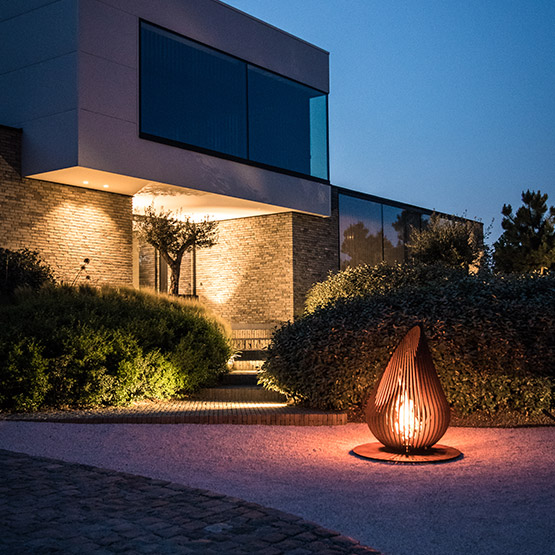
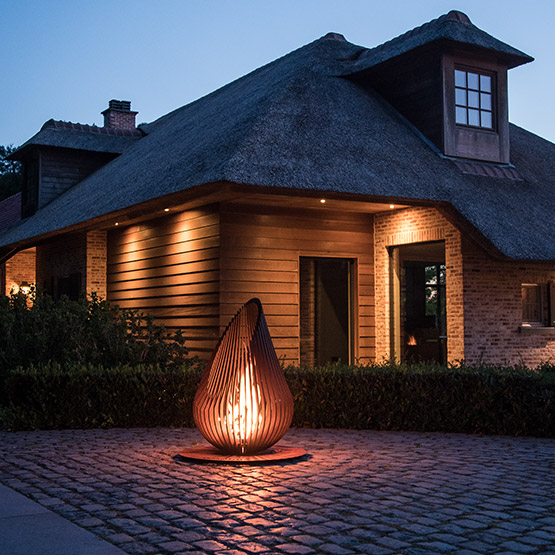
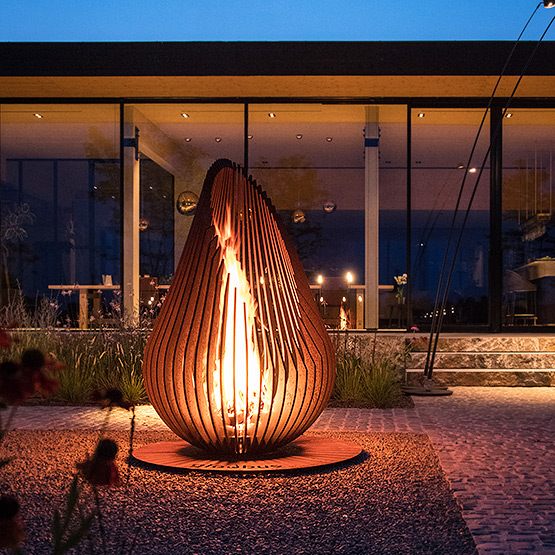
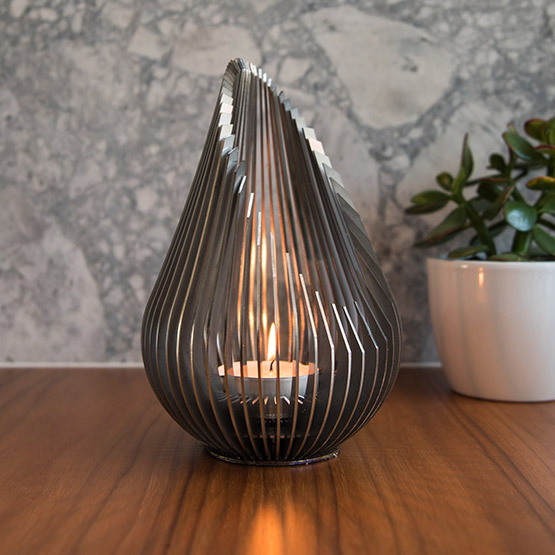
If you are searching for a built-in outdoor fireplace under a canopy, this distinction matters: the Glowbus Dewdrop is a freestanding object for the open air. Not a closed stove, but a handmade Belgian fire sculpture that makes fire visible, tangible and social. That sculptural character is exactly what makes it special, and why placement should always be deliberate. If you are still deciding between a fire pit or design fire pit, that comparison will help you make the right choice.
Frequently asked questions about an outdoor fireplace under a canopy
Can an outdoor fireplace stand under a canopy?
Yes, if the canopy is open enough, there is good ventilation and you keep plenty of distance from the roof, walls and furniture. With an open model such as Dewdrop, those conditions are essential.
Which fireplace is suitable for a canopy?
Not every fireplace suits every canopy. In an open and airy outdoor space, a freestanding fire sculpture can work, provided the placement is safe. In small or semi-enclosed spaces, open fire is usually not a good choice.
How do I prevent smoke under the canopy?
Use dry, untreated wood, do not build the fire too large and choose a spot with plenty of openness at the sides. If smoke keeps lingering, the location is too sheltered or the wind is unfavourable.
Can a Dewdrop stand on a wooden deck?
That is only possible with extra attention to heat protection and stability. On sensitive surfaces, a suitable heat-protection shield is strongly recommended. Always check that the surface is not heating up excessively.
Is bioethanol better under a canopy than wood?
Bioethanol can be more pleasant if you want less smoke and a calmer flame pattern. The basic rules remain the same: sufficient ventilation, plenty of clearance and careful handling of heat and fuel.
If you want to assess which Dewdrop, fuel option or heat protection suits your terrace, always look at the product specifications and Glowbus's official instructions for use. If you want to compare models, view the outdoor fireplaces in the webshop. That way, fire under an open canopy remains not only atmospheric, but responsible too.




Experience Glowbus®
in your area
To discover the Glowbus® collection in real life, you can contact an official dealer in your area.